So, here's that Pepsi Max ad that made lots of people angry.
Why? Because it seems to imply that the problems of police violence, especially against people of colour, can be solved by a member of the Jenner/Kardashian clan with a cold beverage:
What a different time we live in than 46 years ago, when Coca-Cola quite successfully co-opted the hippie zeitgeist at its very end:
What's different?
Imagine if Coke's iconic "Hilltop"ad, instead of showing a bunch of people singing on a hill (like in The Sound Of Music) instead showed them facing down armed National Guardsmen (like at Kent State in 1970):
Instead of killing four students and wounding nine, in this Coke ad in an alternative 1971, the Ohio National Guardsmen are stopped by a cold beverage. How would the friends and families of the dead and wounded students have felt about the trivialization of their tragedy?
That, I understand, is how many racialized people feel about this week's Pepsi ad in the context of Black Lives Matter.
These just showed up on Ads Of The World, credited to ATHOS\TBWA in Bolivia. Copy says, "A sedentary lifestyle kills like any disease. Change your life for your own life."
The file names indicate that they're some sort of partnership with Bolivia's health ministry, but they are branded only with the Coca-Cola logo and no call to action.
Spec? I don't know. The whole thing is just so wrong on every level. Health authorities partnering with Coke? Coke telling people to get off their asses? That font? THAT FONT?!?!
If so, it's a very Canadian problem — and one that other brands would do well to learn from.
Global News reports that an Edmonton woman was shocked to see these words on the bottom of a cap she had just removed from a bottle of glacéau vitaminwater (a Coca-Cola product).
The woman, 32-year-old Blake Loates, says she was particularly outraged because her younger sister she has a younger sister lives with cerebral palsy and autism.
“We started wondering if it was a disgruntled employee who did that. And then, how did it get out of Coke’s factory?" she told reporters. "We were just really confused.”
Ms. Loates contacted her father in Tacoma, Washington. He immediately wrote an impassioned demand to Coca-Cola for the brand to apologize:
Imagine my surprise when I got this photo from my oldest daughter, Blake, who lives in Edmonton, Alberta in Canada. You see, the “R” word is considered a swear word in out family. We don’t use it. We don’t tolerate others using it around us. We ARE over-sensitive but you would be too if you had Fiona for a daughter!
I know you will likely blame this on some rogue employee at some distant bottling plant. Probably not even one of your employees. But you have invested billions in promoting your brand. (Heck, I’ve been drinking Coke products since I was nine and got my first paper route!) And this single action, this small word printed on the bottom of a Vitamin Water lid, discovered by my daughter in Canada, has inspired me to tell you just how much the “R” word hurts. How destructive it is. How caustic. How uninformed. How isolating. Like the “N” word.
Ms. Loates also shared the letter on Facebook, along with a picture of the cap and of her sister.
Coca-Cola did apologize, in an e-mail. But they also issued a statement claiming that the words were part of a promotion.
From Global:
“We started printing random English and French words under the caps of glacéau vitaminwater. The top word English, bottom word French. In this case, a French word, despite an innocent meaning in French, made the production list of words,” Shannon Denny, director of Brand Communications with Coca-Cola Canada, said in a written statement Wednesday.
We sincerely apologize for having inadvertently offending anyone. We take every consumer concern very seriously. This is a genuine oversight in the review process. The mistake has been corrected and the words removed from all future production.
We recognize now this word should be removed due to the English connotations and have taken immediate action to thoroughly investigate this matter. Again, this was a genuine oversight in the review process.”
As corporate apologies go, it's not bad. HuffPo says Coca-Cola plans to suspend the promotion and will recall product to ensure all remaining "worded" caps have been destroyed.
However, a nice little donation to R-Word.org would have added more weight to it. After all, even an accidental mistake is an opportunity to show what you're made of.
There it is, in all its oddly-centred, fake-ad-looking headline glory.
I'll quote the body copy in full:
For over 127 years, people have been coming together over Coca-Cola products to refresh, to celebrate, and to enjoy a moment with something they love. One reason why is that people have always been able to trust the quality of our products and everything that goes into them.
That’s something that will never change.
But changing with the times and people’s tastes is something we’ve always done. Today, that means offering more great-tasting, low- and no-calorie choices. And while nearly everyone can agree that providing choices to help people manage the calories they take in is a good thing, we understand that some people have questions about the use of low- and no-calorie sweeteners.
Our use of high-quality, low- and no-calorie sweeteners, including aspartame, allows us to give people great-tasting options they can feel good about. Time and again, these low- and no-calorie sweeteners have shown to be safe, high-quality alternatives to sugar. In fact, the safety of aspartame is supported by more than 200 studies over the last 40 years.*
Today, we’re proud to offer a wide range of Coca-Cola products that fit different people’s life- styles. Because we believe that when people come together with more choices that are right for them, good things happen.
For more information, including third-party studies on the benefits and safety of low- and no-calorie sweeteners, go to beverageinstitute.org
*International Food Information Council Foundation. 2011. Everything You Need to Know About Aspartame. Magnuson, B.A., et al. 2007. Aspartame: A safety evaluation based on current use levels, regulations, and toxicological and epidemiological studies. Crit Rev Toxicol. 37: 629_727. Aspartame is safe for use by nearly all populations. The only exception is people born with phenylketonuria (PKU) who cannot metabolize phenylalanine. But, this does not mean aspartame is unsafe for other consumers.
Ad Age says the campaign will run in USA Today in Atlanta, the Atlanta Journal Constitution and the Chicago Tribune. Then again, media buys are just proof it's a real ad. Many more people will see it online.
Ad Age also quotes a Coke news release:
"We believe there is a real opportunity to bring people together to educate them about low- and no- calorie sweeteners. Low- and no-calorie sweeteners offer a great way for people to manage their calories while still enjoying the sweet taste that they love. We understand, though, that some people have questions about these ingredients, especially aspartame. We felt it was important for us to answer these questions and reinforce that these are ingredients people can feel good about."
I'll try not to write anything I could get sued for. I'll just say that, as a parent, I do not believe "diet" soft drinks are a healthy choice for me or for my son, and we will not have them in our house. We promote drinking water as the #1 thirst quencher for him, followed by milk and limited fruit juice. We even allow the occasional sweetened "pop" in the house, but prefer real sugar over corn syrup. That's just us.
Intuitively, people choose non-caloric artificial sweeteners over sugar to lose or maintain weight. Sugar provides a large amount of rapidly absorbable carbohydrates, leading to excessive energy intake, weight gain, and metabolic syndrome. Sugar and other caloric sweeteners such as high fructose corn syrup have been cast as the main culprits of the obesity epidemic. Whether due to a successful marketing effort on the part of the diet beverage industry or not, the weight conscious public often consider artificial sweeteners “health food”. But do artificial sweeteners actually help reduce weight?
Surprisingly, epidemiologic data suggest the contrary. Several large scale prospective cohort studies found positive correlation between artificial sweetener use and weight gain.
They didn't claim is was good for you. They just said it was "safe" and that you can "feel good about it". If you want a better look at their arguments and sources, there's a handy infographic at their advocacy site.
As a parting thought, however, I wonder if drawing attention to the issue is going to backfire.
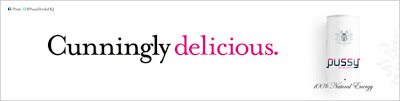
Scottish soft drink brand Irn-Bru is known for its cheeky ads. So when a UK competitor launched a drink called "Pussy," I imagine they took it as a challenge.
With "Fanny" cans, Irn-Bru is also taking a shot at a European Coca-Cola campaign that puts popular first names on cans. (For those unaware, "Fanny" is UK slang for female genitals.)
Forbes reports that Bolivia's Minister of External Affairs, David Choquehuanca, announced that Coca-Cola will be banned in Bolivia on December 21, when the Mayan calendar enters a new cycle.
According to Choquehuanca, the date marks the end of capitalism and the start of a culture of life in community-based societies. In order to celebrate that, Bolivia’s government is already planning a series of events that will take place at the Southern Hemisphere’s Summer Solstice on La Isla del Sol, one of the largest islands in Lake Titicaca.
“The twenty-first of December 2012 is the end of selfishness, of division. The twenty-first of December has to be the end of Coca-Cola and the beginning of mocochinche (a local peach-flavored soft drink),” Choquehuanca told reporters at a political rally for Bolivia’s president, Evo Morales. “The planets will line up after 26,000 years. It is the end of capitalism and the beginning of communitarianism,” he added.
...and drinking local, I guess.
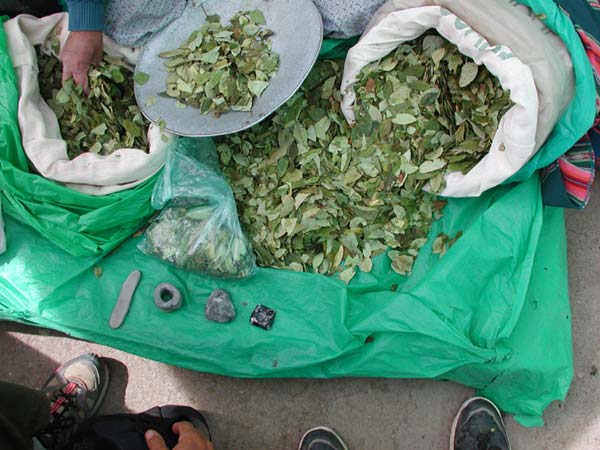
Far from banning "coca" itself, however, Bolivia is pledging to legalize the consumption of coca leaves, a centuries-old tradition strongly rooted in the beliefs of indigenous peoples.
There may be hope for Coke drinkers in Bolivia, however, as Consuelo Ponce, the spokeswoman to the nation’s David Choquehuanca, insisted that his comments, made by the politician during a July 13 rally for Bolivian President Evo Morales, “were taken out of context.”
Coca-Cola, Bolivia, had no immediate comment on the matter.
McDonald's pulled out of Bolivia in the early 2000s for not being able to turn a profit there.
Are you over 30? Then you remember this ad. It's one of the most iconic jingles ever written, and perfectly summarizes the end of the hippie era, when the shrinking world just looked like it needed a hug.
In Project Re: Brief, we’ve re-imagined Coca-Cola’s classic ‘Hilltop’ commercial for a modern audience, in the digital age. Fulfilling the promise of the original ad, it allows users to connect with strangers by sending a Coke around the globe to an unsuspecting recipient, making the world feel just a little bit smaller. The ad can be experienced on mobile phone apps in Google’s AdMob network, across iOS and Android devices. Made possible through AdMob rich media ads, coupled with custom-designed vending machines, viewers can truly ‘buy the world a Coke’, with a few taps on their mobile phones. A viewer can decide where to send a Coke by selecting one of many machines located around the world, from New York City, to Cape Town, to Buenos Aires. They can then add a custom text message to personalise their Coke delivery. Google Translate converts these messages on the fly, breaking down the language barrier across countries. A dynamic video with Google Maps, Street View, and composite motion graphics shows the Coke’s journey from the viewer’s current location to the vending machine across the globe. Users can wait for confirmation of their Coke’s delivery, or enter an email address to be notified later. Once the Coke is delivered, recipients are not only treated to the generosity of a stranger thousands of miles away, but they can also say ‘thanks’ by sending a message of their own back to the user. That message is delivered to the user’s inbox where they can read the note and view a video clip of the recipient’s surprised reaction upon getting a free Coke. A gallery showcases some of our favourite shareable exchanges between people around the world connecting over a can of Coke. Today’s technology allows us to make good on a promise Coca-Cola made over 40 years ago, and lets users ‘Buy the World a Coke’ from the palm of their hand.
I want to hang with these cats.
Let's think about this. From a group of people on a hilltop, holding hands and singing together about harmony and togetherness, to anonymous interactions with people around the world conducted through smartphones.
This dude, not so much.
Yeah, we connect with more people now, more instantly and with cool graphics and instant translation. But the word "connect" doesn't mean what it used to, does it?
Advertising Agencies: Grow Interactive, Norfolk, and Johannes Leonardo, New York
This is the creative that used to be there. Pretty run-of-the-mill sexploitative advertising. ("XXX" is one of Vitaminwater's flavours, according to AdFreak.) But the giant version was posted across from Gallery Church, where a small group of Baptist Biblical literalists worship with Rev. Freddy Wyatt.
Wyatt tells the New York Post that he was "angered and brokenhearted" by the ad, because it "takes something that’s pure and precious and just strips it of its value.”
I assume he's talking about sex. Or maybe specifically female sexuality. I would agree that hypersexualized ads do diminish the awesomeness of real human intimacy, however not all sex is "pure and precious". Sometimes, it's dirty and cheap. (At least, I hear some people are into that.)
Anyway, Rev. Wyatt sent just sent four tweets to Vitaminwater and parent company Coca-Cola, and miraculously the company removed the ad the next day, unintentionally creating a great outdoor conceptual piece honouring the fact that is was Good Friday.
The Rev. was so thrilled that he served Vitaminwater at his next service, even though he couldn't believe heis voice could be so powerful. “Here’s four tweets from a random pastor," he said "and without even a conversation, they took it down.
Even though I think this kind of sex in advertising is unimaginative and somewhat demeaning, I find the knee-jerk censorship surprising too. Considering the money obviously spent on the execution and posting, this must have been a real panic for them. Was Coke afraid of having its brand dragged through the mud by a man of god on Easter weekend? No idea.
It couldn't have been Vitaminwater that did it. These are the same people who did the Jennifer Aniston "Sex Tape" hoax to promote Smartwater and had her pose completely nude in their print ads.
Or maybe they found Jesus. I don't know.
There is a male version of the ad as well, by the way:
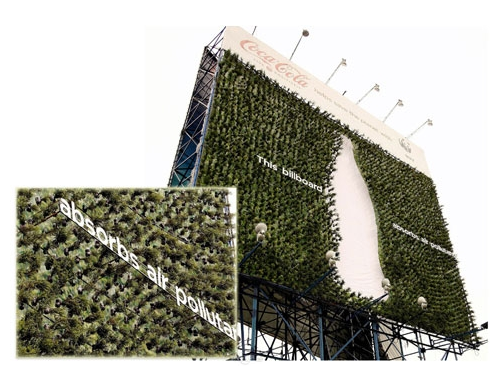
No, that is not a typo. Coca-Cola Philippines has teamed up with WWF to build an innovative outdoor ad:
"The 60 x 60 ft. plant billboard, located along Northbound EDSA-Forbes, utilizes a thriving species of Fukien tea plant, which absorbs air pollutants. According to botanist Anthony Gao, each plant can absorb up to 13 pounds of carbon dioxide in a year, on the average. 'This billboard helps alleviate air pollution within its proximate areas as it can absorb a total of 46,800 pounds of carbon dioxide from the atmosphere, on estimate.' Gao says.
Recyclable materials were used for the overall make-up of the billboard. 3,600 pots were used, recycling old bottles of various Coca-Cola products. These bottles were filled with a potting mixture made up of a combination of industrial by-products and organic fertilizers—a formulation that is stable and light-weight . These bottles were also designed to hold the plants securely and to allow the plants to grow sideways. Additional holes were made for proper drainage and for holding the drip lines in place.
A drip irrigation system, also known as trickle irrigation or micro-irrigation, was especially installed for efficient water distribution. This irrigation method saves water and fertilizer by allowing water to drip slowly to the roots of plants, through a network of valves, pipes, tubing and emitters. The system is operated on a schedule to distribute water with nutrients to the plants. It provides the plants with what they need when they need it.
With all the eco-friendly mechanism it employs and the relevant advocacy it stands for, this innovative advertisement is a salient reminder for Filipinos to take an active hand in protecting and saving the environment."
Perhaps Coke could do more for the atmosphere by not trucking megalitres of packaged liquid all over the place, but that's just me. It's still a cute PR stunt.
There's a bit of a debate going on Osocio's comments thread about this post regarding Kia Canada's new "Corporate Social Responsibility" campaign. Some readers are pointing out (and not without justification) that a car campaign dressed up as goodwill has no place on a social marketing blog.
Ironically, whenever I read the comments, I am confronted with this banner ad just below:
We are working to get Coca-Cola to open up their distribution channels in developing countries to carry 'social products', such as oral rehydration salts to save children's lives. You can by a Coca-Cola virtually anywhere but one in five children die before their fifth birthday. This moratlity rate has not changed significantly over the last three decades which indicates that we need to look for new options like ColaLife.
And, while ColaLife associates itself with Coca-Cola, it's actually lobbying Coke to sign on to this project, open up their distribution channels, and provide seed funding. And they're looking to public fundraising for sustainability.
It's a brilliant idea, piggybacking on one of the most robust distribution systems in the world to get medical supplies to the far corners of the third world with an elegantly simple solution:
They're driven. They're very organized. But I wonder just how much Coke is going to want to take them along for the ride.
If you'd like to help these social entrepreneurs, you can donate online.
Created by British agency Cake, it's a nice summary of where the whole ad business is going.
For traditional advertisers, though, this brave new world can be quite intimidating. Just the other day, someone was asking me what the best practices were for creating a social media presence for a cause: should the image and voice be "official" or "personal"?
I, obviously, prefer the latter, but this is easier said than lived by people like us. We have spent entire careers in a world where brands were engineered down to the tiniest detail—complete with lengthy rulebooks and "brand cops" who would ensure everyone toed the line.
Today's brands truly evolve. They live or die by the whim of the Internet's vocal hordes—truly a force of nature. "Adapt or die" is no longer a marketing cliche. It is the only way.
So what does that really mean? Let's look at "Big Soda". Pepsi is gambling on its customers being altrusitic with the Pepsi Refresh Project, giving away more than a million bucks in Canada "to help fund Canadians’ ideas for moving the world forward in a positive ways".
Coca-Cola, for its Dr. Pepper brand, tried a different tactic in the UK. To try to position the pop as a more edgy brand, they hired a social media agency to create a campaign in which users would opt in to having their Facebook status hijacked by saucy messages and images referencing porn and things like peeing in the shower. This ended up as an object lesson in the demographics of social media, as outraged helicopter parents used their own social networks to force the campaign down.
I don't really think there are hard and fast "best practices" yet in social branding. Everyone is still feeling their way. But every win or fail by a major brand willing to take risks is building the stock of case studies that will help us all figure this thing out. And that makes this a very exciting time to be an "adman".
Speaking of social media, I'm taking a break from it next week. I'll be back on August 23 with another Burundi Monday.