Showing posts with label israel. Show all posts

Thursday, February 20, 2014

Is this eating disorder ad too sexy?

Via Ads of The World

It's a serious question. This woman has the typical idealized body of a model, and despite the scary body painting, the portrayal is undeniably drawing attention to her curves and bare skin.

When I think about eating disorders, I try to imagine looking in the mirror and seeing a funhouse reflection of myself that is always bulgier and heavier than reality.  That's the really scary thing about dysmorphia, as opposed to just wanting to lose weight: it's a chronic mental illness that can kill, because people who have it can't see what they're doing to their bodies:


That's a corporate social responsibility billboard that No-li-ta posted in Milan during the city's 2010 Fashion Week. Shorty after the campaign was shot, the woman, French model, actress and blogger Isabelle Caro, died at age 28.

So there are a number of things to consider here:

1. Is the sexualized presentation of an idealized female body just adding to the problem of media-influenced body image problems?

2. Is the statistic misleading or confusing? While the US National Association of Anorexia Nervosa and Eating Disorders says that "91% of women surveyed on a college campus had attempted to control their weight through dieting. 22% dieted 'often' or 'always'," they give the statistic for the actual mental disorder of anorexia at "an estimated 0.5 to 3.7 percent of women." So how are we defining "eating disorder"?

3. What does the Enosh ad want the viewer to do, be aware that eating disorders are bad? There is little here to help those suffering from EDs, or to help their loved ones understand or intervene.

It may seem mean to criticize a well-meaning ad like this, but as a career social marketer I struggle with these same questions in every new campaign I approach.

Cross-posted at Osocio


Wednesday, August 28, 2013

The Israeli-Palestinian conflict: Coming to a bus near you?


Vancouver's Skytrain has been put in the middle of a bloody political conflict that many Canadians would rather not talk about.

According to the CBC, this poster was placed by The Palestine Awareness Coalition on TransLink media in Greater Vancouver.

Here's their side of the story:
The realities of Palestinian land loss are on display in Vancouver, as a new series of transit ads has been posted at the Vancouver City Centre SkyTrain station and on 15 TransLink buses, on August 27, 2013. The ads, created by the Palestine Awareness Coalition, made up of seven Vancouver-area peace and justice groups, depict the “disappearance” of Palestine due to Israeli occupation over the past 66 years. 
“The goal of the advertising campaign is to make the Canadian public aware of Israel’s steady absorption of Palestinian territory from 1946 to the present day and the constant oppression that accompanies that occupation,” said Martha Roth of Independent Jewish Voices, one of the groups in the coalition. 

And here is another POV from the Jewish Federation of Greater Vancouver:
It is our assessment that these advertisements distort history, are malicious and essentially question the legitimacy of Israel’s right to exist as a Jewish state. 
We believe it is no coincidence that this advertising campaign will coincide with the sacred holy days of Rosh Hashanah and Yom Kippur. 
TransLink—the regional transit authority—has a clearly defined set of advertising policies and guidelines, which restrict the display of ads that make public transit unwelcoming for any ethnic or racial group—the appropriateness of which has been affirmed by the Supreme Court of Canada. 
As the advocacy arm of Jewish Federation of Greater Vancouver, CIJA | Pacific Region has addressed this issue directly with TransLink—both with members of its Board and its Management—and has asked the transit authority to comply with its stated policies and withdraw its approval for the ads. 
TransLink has since confirmed that they have reviewed the matter and that they recognize the offensive and provocative nature of the advertisements. Despite our view that the advertisements contravene TransLink’s own policies, TransLink has decided to proceed with allowing the advertisements to be displayed. 
Public opinion toward Israel will not change as a result of these ads. Support for Israel locally, provincially and federally across the political spectrum has never been stronger.The objective of the sponsoring groups is clear: to gain publicity for their marginalized views, which fall outside of mainstream Canadian opinion. Countering these ads in the public domain (on buses, for example) would only raise the profile and lend credibility to these marginal groups. 
Our community is strengthened by its diversity of opinions and views. However, on the core issue of Israel’s right to exist as an independent Jewish state in peace and security – we stand together.
And here is TransLink's statement:
TransLink does not endorse nor advocate any position put forward by outside advertisers. In addition, as a public agency, TransLink's advertising policy cannot violate freedom of expression under the Canadian Charter of Rights and Freedoms. Freedom of expression is a protected right under the Charter. 
TransLink does not have the legal authority to deny ads as long as the ads comply with the Code of Canadian Advertising Standards, other laws such as the Human Rights Act and TransLink's Advertising Policy. This is in accordance with a 2009 Supreme Court of Canada decision that struck down the portion of TransLink's Advertising Policy that prohibited advocacy ads. 
The Disappearing Palestine ad was referred to the Canadian Advertising Standards office for review by Lamar (the contracted agency that oversees ad placements and buys on our transit system) prior to its placement. In addition, TransLink sought a third-party legal opinion about this ad with regard to the Canadian Charter. That legal advice noted the Supreme Court of Canada decided that TransLink is subject to the Charter in its role as the host of advertising. 
If TransLink accepts advertising, it must not restrict content, (i.e., the freedom of expression of its advertising customer or potential customer under Section 2(b) of the Charter) except in accordance with Section 1 of the Charter which makes all Charter Rights subject to "such reasonable limits prescribed by law as can be demonstrably justified in a free and democratic society." TransLink has been advised that no such "limit prescribed by law" would prohibit the Disappearing Palestine advertisement under TransLink's Advertising Policy, the Canadian Code of Advertising Standards, or other applicable "law" such as the Human Rights Act. 
We appreciate that some advertisements on the transit system may cause concern for customers. However, our advertising policy is posted online and guides all advertising on TransLink property. Concerns about this ad - or any advertising on the transit system - can be referred to the Canadian Advertising Standards office. 
As a transparent public organization, we continue to uphold the laws of our country while we work to provide the best possible customer service. We hope concerned customers understand that within defined limits TransLink has no legal authority to decline advertising content.
So here we have three ways of looking at an ad. The Palestine Awareness Coalition was careful to keep it factual and historical/geographical, which got Code approval. The Jewish Federation of Greater Vancouver was correct in seeing the placement and timing as deliberately provocative and polarizing — but they provoked back harder by referring to the Palestinians as having "marginalized views". (As a messaging geek, I have to point out that they should have used "marginal" since "marginalized" implies deliberate attempts to push into obscurity.) TransLink is complying with the Charter, which overrules their own ad policy. What else can they do?

So, who's in the right? Here in Canada, where we'd rather not think about our own past of Protestant vs. Catholic, and English vs. French (not to mention European vs. Aboriginal) violence, it's always difficult when other imported conflicts cause divisions between friends  in our multicultural society.

 Let's just hope some constructive discussion comes out of this.

UPDATE: The campaign is planned to run in other Canadian cities as well.

Monday, August 19, 2013

The most explicit ad for a mainstream newspaper ever?


It's for the online edition of Ha’aretz. The script is in Hebrew, so I'll have to trust the description given in The Hollywood Reporter:
The spot, which surfaced online via YouTube Sunday and currently has more than 100,000 views, features a couple engaging in multiple sexual positions while the male complains about the act being mundane and outdated, indirectly referring to the publication's traditional reputation. 
"The design is impressive and comfortable, but user experience as a whole -- there's a slight sense of 'been there, done that,' " says the actor, with the female on top of him, followed by the slogan "Life is not as interesting as Ha'aretz's new website."


The source also claims that some Ha’aretz staff members have started a petition to demand the industrial be taken down, stating (in awkward translation): “the newspaper we are all happy of selected to advertise itself in among the most despicable sexist commercials seen in recent time, with an ad that promotes pornographic content in the vein of edgy interest younger viewers … We’re ashamed today to function in a newspaper that under untrue pretext of irony and elegance (with dubious high quality), showcases a quiet lady as a sex-related object.”

Can any Hebrew-speaking readers shed some more light on this controversy?

Wednesday, July 10, 2013

Israel: Come for the culture, stay for the group sex?


I never really associated Israel as a place to get one's freak on. But apparently, I've been missing out on Tel Aviv's "24-hour" party culture. Which apparently includes MFM threesomes in the shower:


The video is the latest provocation from Size Doesn't Matter, "a cutting-edge social media experience that includes videos, an interactive website and promotional give-aways... aimed at highlighting the multitude of Israel’s accomplishments and contributions in a new, fun and attractive way"

An outreach of Canada's Centre for Israel and Jewish Affairs, SDM is trying to attract a target audience of young Canadians with an interest in Israel. They previously raised eyebrows with this 2010 video, which is one, drawn-out, awkward oral sex gag:


The new threesome video, according to the Jewish Tribune, annoyed Canadian rabbis who were exposed to it:
“I would have hoped that even supposed secular Tel Aviv had greater appeal than a shower and a threesome,” said Rabbi Mordecai Zeitz of Montreal’s Congregation Beth Tikvah Ahavat Shalom Nusach Hoari. “It’s unfortunate that we are afraid to market our true essence, especially as part of what the rest of the world considers the Holy Land.” 
“I think they want to promote that it’s an open society but there are other ways of doing that,” said Rabbi Philip Scheim of Toronto’s Beth David B’nai Israel Beth Am Synagogue. “You don’t want people coming to Israel for sex and that’s almost what it’s suggesting. It’s the ultimate trivialization of the Zionist dream and bordering on the extremely offensive.” 
Rabbi Scheim described the video as “soft porn” and added, “This is a very poor use of communal funds. This is not what Jews fought and dreamed for over the centuries; this is not what we fought to achieve or dreamt to achieve or prayed to achieve.”
I can certainly see a generation gap here. Both videos are mostly harmless, even though they're juvenile and not at all strategic. My guess is that they're the work of young creatives who haven't grown out of the inevitable "SEX! Now that I have your attention" phase.

Monday, October 1, 2012

Rubenesque beauties in need of cosmetic surgery?


Neither does cynicism, apparently. At least when it comes to surgically imposing beauty standards.

Ad by Brandbox Branding & Creative, Uzbekistan.

Via Ads of The World

Thursday, August 23, 2012

Ford to minivan drivers: "You suck"


Can anyone really tell the difference between SUVs and Minivans anymore? In 2012, Car and Driver announced the 2012 Ford C-Max as "Ford’s latest attempt at a minivan." Two years later, it's a "car" in the United States, and a "compact minivan" in Israel.

And apparently, Ford is willing to completely turn its back on the minivan market (in Israel, anyway) with this anti-SUV campaign by BBR Saatchi & Saatchi.

See the other two, totally redundant, ads in the campaign at Ads of The World.

Tuesday, August 21, 2012

SF public transit disclaims racist ad


The above ad, according to Mother Jones, was placed on San Francisco Municipal Transportation Agency (Muni) properties by anti-Muslim activist Pamela Geller.

Muni felt they had to accept the ad, based on what they (and legal precedent) perceived as Ms. Geller's First Amendment rights.

So they used their adjacent ad space to run a disclaimer:


Apparently, Ms. Geller insists that the Ayn Rand-inspired quote in her ads refers to particular acts taken by Palestinian groups during the Israeli-Palestinian conflict. But that's not the Randian context of the copy.

Mother Jones quotes Ayn Rand in full:

Further, why are the Arabs against Israel? (This is the main reason I support Israel.) The Arabs are one of the least developed cultures. They are typically nomads. Their culture is primitive, and they resent Israel because it's the sole beachhead of modern science and civilization on their continent. When you have civilized men fighting savages, you support the civilized men, no matter who they are. Israel is a mixed economy inclined toward socialism. But when it comes to the power of the mind—the development of industry in that wasted desert continent—versus savages who don't want to use their minds, then if one cares about the future of civilization, don't wait for the government to do something. Give whatever you can. This is the first time I've contributed to a public cause: helping Israel in an emergency. 
Dehumanizing your enemy — now who's the "savage"?

Monday, May 14, 2012

A good consumer ad, for a change*

Via IBiA

Attention-getting visual? Check!
Makes want to decode it? Check!
Product benefit clearly communicated? Check!

It didn't even need copy. By Euro RSCG, Tel Aviv, Israel.

*This post is dedicated to Kel, who wanted me to post more ads I like, rather than those I hate.

Wednesday, February 8, 2012

In times like these, comedy means war


The escalating tensions between Israel and Iran have been a concern for some time now. In the midst of this, the Israeli cable company, HOT, produced an ad featuring a comedy team from the popular sitcom Asfur being summoned to Iran by an undercover Mossad agent.

The video is subtitled, and the YouTube post contains a glossary of all the cultural context, slang, and double meaning used in the ad.


You might put this down to typical culture-bashing between enemies, which Iran must be used to by now. But the video also featured a Samsung tablet. And that, to Iran, means war. With South Korea?


According to Haaretz:

"On Thursday, a top Iranian lawmaker said Iran's parliament was considering to cut the country's trade ties with the country, over what he said was an "insulting" commercial, over the depiction of Iran as a "primitive society" and of insinuating that Israel was 'powerful enough to easily destroy Iran's nuclear facilities or assassinate the country's nuclear scientists.'
Head of Majlis Energy Committee Arsalan Fat'hipour told Press TV that Samsung chose to forget the high volume of trade it shares with Iran in its attempt to move closer to Israel, adding that Samsung's apology to Iran, 'though necessary', would not be enough to patch things up with Tehran. 
In response to Iran's claims, Samsung released a statement condemning the production of the commercial by the firm's Israeli branch, with Samsung's Tehran office saying that the spot had nothing to do with the firm and that it had been produced by HOT. "


Silly comedy segments starting trade wars. These are truly very tense times we are living in. The spot has the same cultural arrogance and casual racism that we see in American lampoons of the Middle East, but Iran seems more pissed off by the implication that Israel can wipe out its facilities so easily. I wonder if this is what the international mood was like back in the summer of 1914?

Thanks to Tatjana for the tip

Monday, January 23, 2012

The kettle for people who hate their coworkers

Don't you hate that awkward moment when you find yourself stuck in the office kitchen, having to listen to a colleague dare to speak to you, while you're waiting for the kettle to boil?


Well, fear not. This ultrafast kettle will cut the awkwardness short in faux Dilbert style.

What a relief.

Ad by BBR Saatchi & Saatchi, Tel Aviv, Israel
Via I Believe in Advertising

Monday, January 16, 2012

What the hell is in this baby formula?


Copy says, "New! A natural solution that keeps your facial skin revitalized. A better sleep for your baby with Materna's Good Night infant formula."

Does it have Benadryl in it? Gravol? Morphine? According to this source, the secret ingredient is "special composition of carbohydrates, giving the baby a longer feeling of fullness."


What a terrible idea. Babies wake up and cry because they aren't really supposed to be left alone. (Think about it — in a state of nature, they'd be eaten by wolves.)

I understand that not everyone can or wants to breastfeed or cosleep. But an ad promoting a formula that keeps your inconvenient baby quiet so you can get your beauty sleep really irks me. It's playing to selfishness and vanity.

By JWT, Tel Aviv, Israel

Via Ads of The World

Friday, January 13, 2012

F'd Ad Fridays: Because fat people have no feelings

These two recent ads, both from MCCann Erickson, Tel Aviv, are pretty mean-spirited.

Via Copyranter
Via Ads of The World

Way to prove to the world that advertisers are in a conspiracy to make people feel bad about themselves, guys.

Friday, November 18, 2011

F'd Ad Fridays: Israeli insurer ensures racism outrage in America

This awful, awful Hebrew-language online infomercial for David Shield (דיוידשילד) insurance showed upin my Facebook feed for some unknown reason:


I have no idea why I watched it all. I guess I'm a masochist. And then I saw this scene, at 2:33:


Oh, L O effing L. Without proper insurance covering you while working in some God-forsaken country without public healthcare, you could end up in the hands of some kind of Native witch doctor.

Appalling. And shameful. Ignorant racism is still a worldwide phenomenon.

Tuesday, September 27, 2011

Target Audience: Parents who think their kids are stupid?

Funny ads from Mccann Erickson, Tel-aviv, but will they appeal to today's "my child is a unique miracle of God" parents?


Maybe Israeli parents have a better-developed sense of irony.

Via I believe in advertising

Friday, August 5, 2011

F'd Ad Fridays: In Israel, ice cream melts YOU!

Spoiler: The make sexy time.

I get the concept. I just don't think it works. But it's highly sexualized, so you'll want to watch it anyway.


Joya Nestle from Gravity on Vimeo.

By Geller Nessis/Publicis, Israel

Via Adrants

Wednesday, February 23, 2011

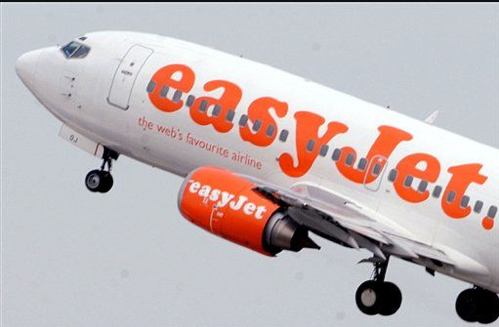
EasyJet Porks Kosher Passengers

Newser reports that EasyJet — a UK discount airline that just launched Tel Aviv-London service with a kosher menu —had a bit of a mix-up in the food and beverage department.

During a 4.5-hour flight, the airline had no food to offer its passengers but ham melts and bacon baguettes.

Not a popular snack in the Middle East.
The airline apologized, but it's strange to think that they would offer nothing but pork products on any route — especially considering the many Jewish, Muslim and vegetarian passengers they must serve. As one passenger quipped, "I think they need a lesson or two on cultural awareness if they expand their routes into the Middle East."

"The Web's Favourite Airline" TO MOCK!


Yet another reminder that branding goes far beyond design and advertising — it's how you relate to your target audience, every single time they experience you. And thanks to social media, the culturally insensitive gaffe is out of the frying pan and into the fire.

Saturday, January 22, 2011

My God, it's a perfect ad!


Click to see larger version.

You don't see these very often. ACW Grey, Tel Aviv, Israel, created this for the Tzabar Travel Agency to promote packages to see Roger Waters in Paris.

Okay, so he's touring The Wall and not Dark Side of the Moon, but who cares? Using the Pyramide du Louvre was inspired.


Via I Believe in Advertising

Thursday, April 15, 2010

Bordering on controversy

Before I landed my first agency job, I was a freelancer who desperately wanted to break in to travel writing. I suppose that's the dream of every well-travelled young scribe with a romantic streak — which is the reason I didn't make much headway.

To this day, I have a soft spot for travel and tourism ads with a historical angle. Whether it's been a branding campaign for the Bytown Museum, or tourist attractions for AT&T long distance, I've enjoyed every opportunity to get my culture on.

I also follow mistakes, such as when an English tourist ad uses a stock photo of Canada, or a photo collage implies that the Canadian view of Niagara Falls can be seen from upstate New York. These are fairly innocent, or even expedient mistakes. St. Peter's Basilica is not technically in Rome — or even Italy — but it's still on the Roman tour agenda. And a trip to Ottawa often includes a visit across the provincial border to the Museum of Civilization. No harm done, really.

And then there's this ad, which appeared in the UK:


Seems pretty average — even boring — but a more detailed examination has caused public controversy leading to a ban by the British Advertising Standards Authority, and has increased tensions over an already tense issue:


The middle pic is of the Wailing Wall and the Dome of the Rock, and is labelled "Jerusalem". But as the Telegraph points out, the view is of East Jerusalem, part of the disputed Occupied Territories of the West Bank.

"'So what,' you say?" You must not be from there, or know many people who are attached to the region.

According to the Telegraph:

"The ASA said the advert breached truthfulness guidelines and ordered it not to be used again, adding: 'We told the IGTO not to imply that places in the Occupied Territories were part of the State of Israel.'

It added: 'We noted the ad stated 'You can travel the entire length of Israel in six hours - imagine what you can experience in 4 days' and 'visit now for more itineraries in Israel' and considered that readers were likely to understand that the places featured in the itinerary were all within the state of Israel.

'We understood, however, that the status of the Occupied Territory of the West Bank was the subject of much international dispute, and because we considered that the ad implied that the part of East Jerusalem featured in the image was part of the state of Israel, we concluded that the ad was likely to mislead.'"

Oh yes, it's political. And as a Canadian guy who has friends with deeply personal feelings on both sides of this complicated and sometimes bloody issue, I don't want to make a judgemental statement here either way.

What interests me more is what the intent was. Advertisers sometimes make mistakes. Or we overgeneralize. Was this an oversight?

The Israeli Ministry of Tourism says no, but insists it was appropriate. "Had the ad omitted a reference to a visit to the city of Jerusalem, it would have been incorrect and potentially misleading" They add hat Israel "took responsibility to support the religious sites of all denominations, a commitment which also formed part of the obligations of an agreement with the Palestinian Authority signed in 1995".

It is interesting to note that last year, the ASA banned another Israeli tourism ad which implied that The West Bank, Gaza Strip and Golan Heights were part of the state of Israel.

I won't dwell on reactions to this issue, except to say that one group of people is angry that it ever ran, and another is angry that it was banned.

I am just reminded what a volatile mix advertising and politics can be. And maybe I won't get so irked the next time the Americans take credit for "our" falls, and just quietly appreciate 150-or-so years of peace on that border.