Showing posts with label branding. Show all posts

Thursday, March 8, 2018

Is McDonald's #internationalwomensday2018 logo-flip a Freudian slip?

MSN reports that, for International Women's Day, McDonald's has flipped the golden arches on one restaurant sign, as well as on social media, to make the M a W.


I've seen comments that it unintentionally ends up looking like breasts. Which brings up the weird psychology behind the original logo.

From Quartz:
Do you get an irresistible urge to visit McDonald’s whenever you see the golden arches? That’s because, subconsciously, the magnificent yellow M reminds you of breasts. At least, that was the theory of the psychologist and marketing design consultant who persuaded the corporation to keep its logo in the 1960s.
The psychologist/consultant was  Louis Cheskin, who applied the Freud-friendly social science of the time to an analysis of the original golden arches, and he believed that the brand's double-dome evoked feelings of maternal love and sustenance.

This may sound a little flakey now, but Cheskin was an innovator in the deep instincts evoked by colour and shape in branding. His advice convinced Ray Kroc to allow the original arches (which used to be an architectural element) to be transformed into what would one day become a global behemoth of a brand.


Wednesday, October 26, 2016

Mexican soft drink places undocumented migrants in America's great immigration story


In The Journey, Mexican soft drink brand Jarritos shows a group of Latin Americans walking determinedly through the desert, then follows it with a grand montage of how immigrants have made the United States what it is today.

I doubt anyone watching, whatever their views on immigration, would miss the implied message. The group on foot are making an undocumented crossing into the USA, but once there they will work hard and contribute the way all other groups of "your tired, your poor, your huddled masses yearning to breathe free" have done.

It's a bold statement, in the face of Republican Presidential nominee Donald Trump's "Bad Hombres" rhetoric and armed, vigilante citizen "border patrols."

Latino Rebels asks, "Are you proud big brands are celebrating the immigrant legacy or is it just commercial exploitation to sell more soda?"

I'd say that it's doing both. Jarritos has a strong presence in the USA, especially among Latino communities. The iconic bottles make a cameo appearance around the 45 second mark:


Yes, it's here to sell. But I think the politics are pretty clear as well. Jarritos has made supporting Mexican immigrants, and appealing to other recent immigrant groups, an essential part of its brand DNA. And by taking sides, it will probably deepen its cultural connection with existing customers.

Watch the video here, in English and Spanish:


Tuesday, June 23, 2015

Tylenol does a beautiful ad that says nothing about Tylenol #HowWeFamily


Sometimes, my industry makes me too cynical. I completely understand why brands want to associate themselves with progressive social issues. The inevitable blowback, from reactionary groups such as One Million Moms, get them oodles of positive earned media. But is it really moving product? Let's have a look:

Beautiful piece. It could have been produced by any one of dozens of human rights groups, if only they had the money. And there's a campaign microsite (of course) for online engagement.

But it's not a human rights PSA. It is an ad for a pain medicine. And the branding is stuck on so bluntly that it seems like more of a sponsored short film than an ad.

Don't get me wrong. I like the video and I agree with its sentiment. But at what point do we question whether consumer brands are manipulating us by piggy-backing on the important social issues of our day? And is that OK with us anyway?

I think it is, but only if we consume the media (and product) with the open-eyed awareness that we are being advertised to. Johnson &Johnson aren't just being nice. They're following a plotted brand strategy, after testing the market last Christmas with a similar ad.

Ad Age quotes Manoj Raghunandanan, senior director-marketing of J&J's McNeil Consumer Healthcare, saying that research conducted after the December campaign "brought significant improvement in brand-equity scores on such survey questions as 'this is a brand that understands me'," which translated into greater sales and market share for Tylenol, "despite the brand putting no other advertising support behind its Extra Strength Tylenol flagship products during that period."

Nothing about the product's efficacy, nor its price, nor even its safety. Just family-focussed branding that builds trust and positive associations.

Perhaps this is the future for brand advertising, and to be honest it feels pretty good. Just don't forget that you are always a customer.

Friday, April 24, 2015

@ProteinWorld vs. "sympathisers for fatties"

The Drum

Oh, dear. A fitness supplement brand in the UK has taken it upon itself to become the patron saint of body shaming.

The Drum reports that, faced with online criticism over its "are you beach body ready?" ad campaign, Protein World decided not only to be unapologetic, but downright nasty:

Twitter
That particular exchange was started by blogger Laurence Hebbard, who wrote about their confrontational social media engagement on Social Media London. Here are some of the curated exchanges:


Someone even made a fake Dove response ad:


As of this writing, the protein shake maker is completely unapologetic. They seem quite happy to bask in the negative publicity (as well as the many Tweets of support from fans).

Is this an example of the tired cliché "there's no such thing as bad publicity"? That remains to be seen. While this kind of obnoxious brand behaviour is bound to ingratiate it to a certain segment of the fitness market, they're also trying to sell weight loss products. Is it really such a great idea to shame people who might actually be interested in such things?

Adopting "being an asshole" as a brand strategy is a risky move, but not an unprecedented one. Now it's just a matter of seeing how many assholes are willing to self-identify by buying the stuff.

Wednesday, June 4, 2014

Nike accidentally endorses NRA pro-assault-rifle PSA


Meet Dom Raso. He totally isn't reading a teleprompter. He would also like you to know that you can't trust the media, but you should trust him because he totally doesn't have a political agenda.

Mr. Raso works for NRA News. He is also a Navy Seal veteran, wearing a t-shirt promoting Operation Hawkeye, an organization that works for honour and recognition of special operations soldiers killed in the line of duty.

Operation Hawkeye, in turn, gets support from Nike. Which explains the logo on the shirt.

Only problem is, the Nike logo has now been used to endorse assault rifles, or at least an insistence that civilians have access to them and be able to take them everywhere.


I wonder how Nike feels about that?

H/T Gawker

Friday, April 4, 2014

Maple Leaf joins the big brands backing same sex marriage


It's getting harder and harder to keep track of all the ad campaigns that embrace marriage equality. The most recent headline-generator was Honey Maid's "wholesome" campaign, and especially their video response to the resulting criticism.

Compared to such epicness, the brief validation of two women in wedding gowns in this rather heavy-handed emotional brand video seems almost conservative:


Same-sex marriage has been nationally recognized here in Canada since 2005, so the brand isn't taking the same chances as an American one would.

Regardless, good for Maple Leaf. I don't usually buy their products, as I'm kind of grossed out by processed meats that come from industrial facilities. But at least they're adding some progressive social realities to their brand.

Monday, March 31, 2014

Is every brand a "challenger brand" now?


So, Taco Bell is offering breakfast in the United States now. Should McDonald's be worried? As the undisputed gods of the fast food breakfast, McD should, by all accounts, ignore all challengers — at least in public.

At least, those were the ironclad Rule of Marketing we were taught: The #1 brand in a category never acknowledges the competition. Coke, for example, pretends Pepsi doesn't exist, so that Pepsi has to spend all its efforts comparing itself to Coke.

Fast food was pretty much the same: McDonald's just IS, while Burger King, Wendy's and the others spend advertising dollars basically reminding you that they aren't on top.

Taco Bell's ad, above, is no exception. (And not a new approach, either.) So did McDonald's just chuckle softly to itself, and go swimming in a room full of Egg McMuffin revenue?

No, they did not:


Is this a foolhardy brand strategy deviation by a rogue social media team, or is McDonald's really going to start validating its competition now? Is it yet another marketing rule we need to rewrite?


Thursday, October 10, 2013

Poster puts racialized sports logos in context

Some of you may have seen my comments quoted in a couple of Adweek posts, on September 11 and 30, about the Washington Redskins controversy. Basically, I said that while I understand how passionately the fans hold on to their traditions, the phenomenon of racial epithets and stereotypes in sports logos is ultimately doomed.

One of the common arguments is that nobody would accept the same treatment of other historically oppressed groups in sports marketing. The National Congress of American Indians however, recetly took it to the next level:

"Pro-Football's use of the 'Redskins' mark disparages Native Americans just as 'San Francisco Chinks', 'New York Jews', 'Dallas Wetbacks', 'Houston Greasers' and the 'Green Bay Crackers' would disparage other groups if they were the subject of trademark registrations," states a legal brief sent by the NCAI to the US Supreme Court. They're asking that the "Redskins" trademark be rescinded.


This mysterious poster, however, doesn't seem to appear on the NCAI site, even though it has been attributed to the organization by CBS news. All references to it, however, seem to use the same low-res screenshot posted on Tumblr, four years ago. Due to the recent re-emergence of the issue around the Washington Redskins, however, it has gained new life on the social internet.

Can anyone find the original source?


Wednesday, September 11, 2013

Dear Brands: please stop appropriating terrorism

Update: They apologized and the embedded Tweet was removed.

Here's a screencap.


It was a terrible thing. It killed a lot of people. It started wars. It forced us to give up a lot of freedoms.

But one thing is for sure: It did not happen so that brands could borrow interest from death.


I'm only picking on AT&T because it just showed up in my feed. Please share any others you see at the contact form below.


Wednesday, May 8, 2013

Radio Shack tries to sex-up its brand, fails


Radio Shack? Really?


The Wall Street Journal reports that the approach is moving product:
The ad, which has been out for about a week, has already gotten more than 600,000 hits on YouTube and the stores allegedly can’t keep the product in stock, according to a research note today from David Strasser, retail analyst at Janney Montgomery Scott.
“This shows a management team willing to take risk, and a desire to think outside the RadioShack box,” Mr. Strasser said of the new ad campaign. “It’s more like a beer commercial than a [consumer electronics] commercial, but that is what this company needs to attract certain target customer groups.”
Creatively, it's kind of sad. The ad is a direct lift from the original Robin Thicke (ft. T.I., Pharrell) video, "Blurred Lines":


This is borrowed interest taken to the extreme. The difference is, sexual objectification of women in music videos — ethics aside — is still a different thing than the same sexual exploitation perpetrated by a brand. One has a certain amount of artistic licence. The other is at the mercy of its customers, stockholders and partners. The lines between the music business and retail may be blurring, but there is still a difference when it comes to what they have to lose.

Radio Shack may be getting some renewed interest from this lazy marketing, but long-term they risk alienating customers. Including some who buy Beats by Dre.

AdFreak's David Gianatasio lays it out pretty succinctly:
Yes, the clip has quickly amassed 700,000 YouTube views. But RadioShack shouldn't get too excited about that, because I'm betting the numbers say more about the tune's smooth mojo and the sexy imagery on display than any renewed excitement about the retail brand. RadioShack comes off like an unhip, balding, middle-aged dude desperately trying to prove he's down with the kids—and failing badly. (Being unhip, balding and middle-aged myself, I should know!) The dying chain's desire for reinvention is understandable, but how tossing off quick-buzz pop-culture crap like this is supposed to help it survive over the long haul beats me.

Wednesday, February 6, 2013

Umbro takes a very English shot at Nike

Via The Drum

Classic British sportswear brand Umbro has been supplying the official "kit" to England's football (soccer) teams since the 1950s. That's a big deal to the fans, according to The Daily Mail:

When Blackpool and Bolton Wanderers contested the Matthews Final in 1953, they did so wearing Umbro. When a 17-year-old Pele entered the world stage at the World Cup in 1958, he did so in Umbro tailoring.  
When Bobby Moore lifted the Jules Rimet trophy for England in 1966, he wore a red Umbro shirt, and when Celtic and Manchester United pioneered European club success for Britain in the sixties, they were head to toe in Umbro.  
When Banks made that improbable save in 1970, when Gazza wept, when Butcher bled, when Southgate failed and when Beckham kicked out – it was all in Umbro attire. 
But no more. Nike acquired Umbro in 2008, then sold it off to Iconix last year. But guess who got to keep the uniform contract? Tonight is the last time the team will wear Umbro.

As a parting shot, and to commemorate their history with British Football, Umbro unveiled this ad today with a snide abuse of Nike's brand essence.

The Drum quotes a branded press release:
 It's been an honour to be associated with the national team for such a long period of time, and we wanted to take this occasion to celebrate some of the classic kits we've created for England. 
Umbro’s founder Harold Humphreys once said: ‘There are three things which constitute the ability to succeed - enthusiasm, tenacity and sheer damned cheek - but all in good measure. 
We think that we've stuck by these principles over the past 89 years, and we will continue to do so as we look forward to a bright future.

Tuesday, January 22, 2013

Ads for an energy drink called "Pussy" are shockingly tame


According to Adfreak, the brand was developed by an out-of-work college grad in the UK who was inspired by the success of the massive Virgin brand. He eventually launched an energy drink called "Pussy".

According to the brand site, the drink is made of white grape juice, lime juice, and lightly carbonated water — mixed with grenadilla, lychee, siberian ginseng, guarana, sasparilla, schizandra and milk thistle. (I'll assume the guarana is the real kick. It's packed with caffeine.)

But coming up with a cheeky brand is not that remarkable. What I like is the way that agency Beattie McGuinness Bungay decided to keep the humour on the dry side of puerile:


This approach fits in with a new comfortableness with having genital humour part of public discourse. By being naughty, but not in a locker room way, the ads can make people giggle without putting anyone down.

Thursday, January 10, 2013

British retailer de-brands products to provide "quiet" to consumers


Selfridges, a British department store chain, wants to give customers a break from the overwhelming "noise" of the modern world.

According to their "No Noise" campaign site:
As we become increasingly bombarded with information and stimulation, the world is becoming a noisier place. In an initiative that goes beyond retail, we invite you to celebrate the power of quiet, see the beauty in function and find calm among the crowds.
This idea of an oasis of calm in the middle of retail madness is actually as old as the store itself. When Selfridges opened in 1909, Harry Gordon Selfridge created a Silence Room where busy shoppers could "retire from the whirl of bargains and the build up of energy". The store will soon have a new Silence Room, designed by Alex Cochrane:


But the campaign gimmick of most interest to me is "The Quiet Shop," in which iconic products by Heinz, Beats by Dre, Levi's, Marmite and others have provided exclusive "de-branded" products to promote the initiative.


I love it. And it's really impressive that these classic brands — run by marketers who you would expect to be extremely protective of their established standards and equity — would be willing to participate in a project that basically admits our world is over-branded.

Ahhhhhh...

You can buy the limited-edition products online.

Tip via The Drum

Friday, November 30, 2012

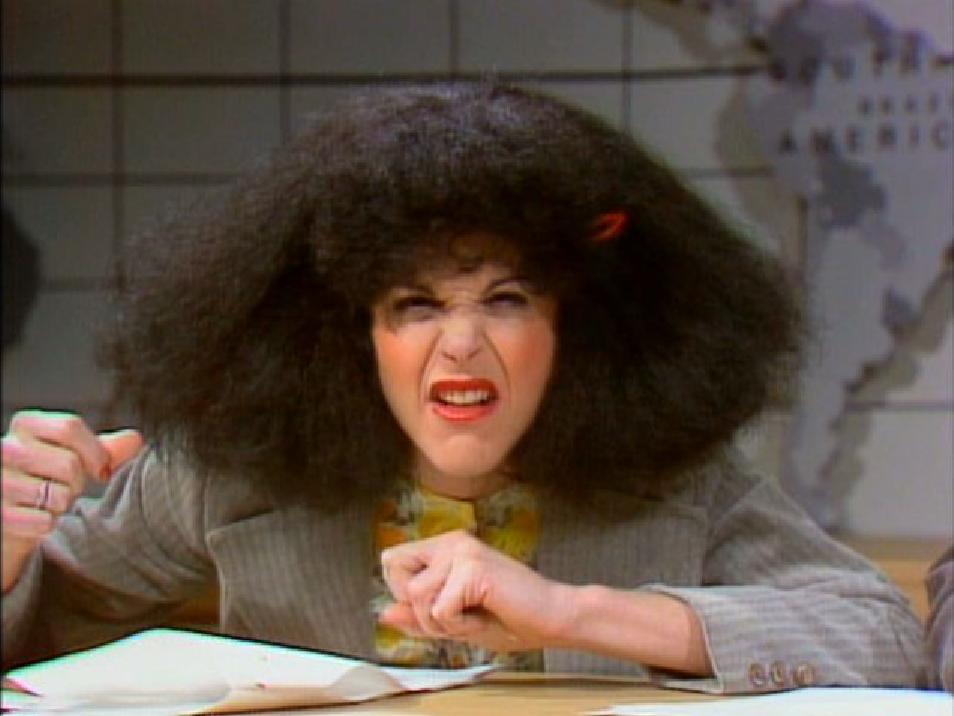
Maybe now the kids will know who Gilda was


Gilda Radner was an amazing person. A strong and defiant woman comedian, when women's liberation was just gaining steam. Loving spouse of colleague Gene Wilder. Author of a book that made my mom cry. And another person killed by cancer, in 1989.

Two years after Ms. Radner's death, a network of clubhouses where people living with cancer, their friends, and families could meet for support was founded. It was called "Gilda's Club". It was a fitting legacy.

Which is why I was saddened to read this week that some of the Gilda's Club affiliates, most notably the one in Madison, Wisconsin, decided to drop Gilda from the name and become the generic "Cancer Support Community".


“One of the realizations we had this year is that our college students were born after Gilda Radner passed, as we are seeing younger and younger adults who are dealing with a cancer diagnosis,” Lannia Syren Stenz, the club’s executive director, told Madison.com. “We want to make sure that what we are is clear to them and that there’s not a lot of confusion that would cause people not to come in our doors.”

The internet and mainsteam media reaction was swift and angry. One of the more articulate complaints came from film critic Richard Roeper in the Chicago Sun-Times:
Having co-hosted an annual Gilda’s Club fundraiser in Chicago on a number of occasions, yes, I’ve had to explain the name and the legacy of Gilda Radner more than a few times. So what? It’s an opportunity to tell people about the wonderful characters Radner created for “Saturday Night Live,” and the comedic trail she helped blaze for brilliant minds such as Tina Fey and Amy Poehler and Julia Louis-Dreyfus.
...
Members of the freshman class at Walter Payton College Prep were just babies when Walter Payton died. Forty-year-olds stuck in traffic on the Kennedy Expressway hadn’t been born when JFK was assassinated. Across the country, hospital wings and expressways and community centers and schools and airports and churches and skyscrapers are named after individuals that impacted the world. Years ago. Decades ago. Centuries ago. This is what education is all about — teaching the lessons of the past. 
If a name change encourages even one additional young patient to seek comfort and support at one of these centers, it’s hard to argue against it. Nor am I suggesting anyone at those centers is disrespecting Ms. Radner’s memory. Obviously that’s not the intention.
But we are a better people when we honor and remember those that came before us, even if it means we have to take a breath, remind ourselves we were once young too — and explain yet again the story behind the name on the door.
Exactly. In today's media landscape, an opportunity to tell a great story is a great brand asset. The answer to "Who's Gilda" will educate a whole new generation about a person and a cause. And it's interesting to note in the places where that story took Gilda Radner — Toronto and Chicago with Second City, and New York City — have no intention to change the name of their Gilda's Clubs.

Perhaps we should thank the misjudgement of Madison's club, however. By claiming that Gilda Radner was not relevant to Millennials, they actually caused her current relevancy to go through the roof.


Monday, November 12, 2012

Femen parody the Apple logo


Since I last wrote about Ukraine's most famous feminists, they have moved their main operations to Paris, France, and have started merchandising quite heavily to raise funds for their ongoing topless activism.

I wonder what lawsuit-happy Apple will think of this one?

Friday, November 9, 2012

The evolution of branding, as seen in three U.S. elections

Via Wikipedia
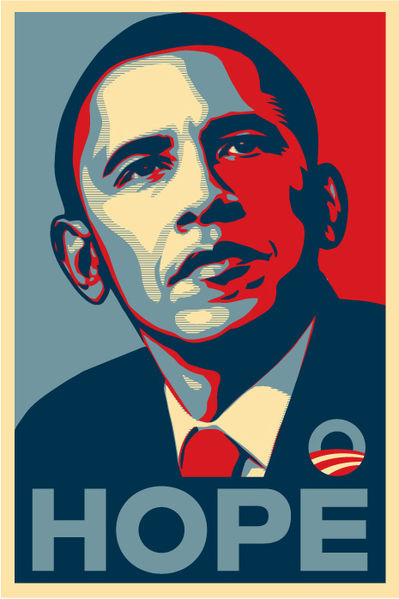
Remember this? It's hard not to. Artist Shepard Fairey's homemade poster became the symbol of Barack Obama's first successful Presidential campaign in 2008. In branding terms, it summarized all of the promise of a new, more positive, empathetic and diverse United States, after eight years of President George W. Bush. It was President Obama's brand.

What made it new and interesting, to a branding nerd like me, is that it was not a "top-down" brand. It incorporated Mr. Obama's face, his official "O" logo, and one of his campaign themes. But in bringing it together in sharable, emotive and graphic form, Mr. Fairey created a meme that could be passed around the emergent social mass-media, remixed, and "owned" by just about anyone. It became Barack Obama's brand not because his campaign team said it was. The brand was what his fans (and enemies) said it was. Branding had made the leap from autocracy (monolithic, professionally-designed brand properties with thick standards guides and "brand cops") to democracy (grassroots, evolutionary and widely distributed). Social media were key to President Obama's political success.

When the mid-term election of 2010 came, the right wing of the United States had caught on to idea of ground-up, populist, branding. And so we saw the rise of the Tea Party movement.  But things had changed already. Branding a political movement had become not a matter of developing one powerful with emotional resonance for supporters to rally around. Instead, it was a broad idea that encouraged individual expression.


As you can see from this page from a Google Image Search, the various Tea Party organizations use a variety of symbolism and messaging. The original movement was one of constitutional literalism and drastic reduction in both taxes and government spending. This old-school conservatism, however, was soon swamped by a plethora of popular "culture war" ideologies taken from fundamentalist Christianity, such as visceral opposition to abortion, the science of evolution, and equal rights for homosexual people, as well as various anti-immigrant, pro-gun and other right wing issues. It became not one movement, but many.

Which brings us to the election that just happened. In 2012, social media have evolved to the point where any person — or idea — can become famous and powerful simply on its own merits.

Early on, organizations such as Planned Parenthood identified the potential for young women to be a significant factor in the election. As a large and established NGO, they took many of the traditional paths to advocacy, such as spending $5,086,007 on political action — most of which went to opposing Tea Party and other ultra-conservative candidates. (They achieved the highest return on investment, 98.58%, of any Political Action Committee in the election, according to TPM.)

Planned Parenthood also engaged in extensive social media campaigning, creating "Pillamina" (a birth control pill mascot who followed Mitt Romney's campaign to highlight reproductive freedom) and a branded campaign, Women Are Watching.

But underneath all the big guns booming the feminist message, two truly spontaneous brands emerged that, in my opinion, really turned out the female voters for President Obama.

One was just three words:

As the election approached, this catchphrase from 2010 gained new life on Twitter as a hashtag. Suddenly, it attached to every news item about Republican politicians who made outrageous comments about birth control, abortion, rape, and women's sexuality in general. It became such a powerful brand that opponents started using it too.


The other branded idea that emerged resulted from a single comment by conservative radio comedian Rush Limbaugh, about a young female law student who was denied the right to speak at a congressional hearing on contraception:
"What does it say about the college co-ed [Sandra] Fluke who goes before a congressional committee and essentially says that she must be paid to have sex -- what does that make her? It makes her a slut, right? It makes her a prostitute. She wants to be paid to have sex. She's having so much sex she can't afford the contraception. She wants you and me and the taxpayers to pay her to have sex."
"Slut"... the word had already been successfully appropriated for the women's movement by Toronto's (and soon the world's) Slut Walk movement. Now the self-branded "sluts" turned their anger on the politicians who would challenge their reproductive freedom. Facebook cause pages with names like "Rock the Slut Vote" and "This Slut Votes" suddenly appeared, attracting legions of followers. On every online social platform, there was a constant flow of political "slut" memes, statements and articles.


Like the Tea Party movement, this was not a single organized movement, but many individuals, brands and interest groups that interacted loudly online. Unlike the Tea Party, the #waronwomen and "slut" brands achieved far more unity in their voice and objectives. The focus was simple: reproductive freedom, choice, and support were women's rights. With a single purpose, feminists were able to expose and ridicule some of the Tea Party's most extremist rogues and tie them to Romney/Ryan campaign through the traditional brand strategy of consistent messaging, followed by proof points. And they seemed to have made a real difference.


While exit polls showed that women in the United States supported both President Obama and Governor Romney at an almost even split (55% vs. 45%) among unmarried women, who make up 23% of voters, President Obama was favoured by 67%.

It is widely reported that a political groundswell of (often young) women won the election. Here's how a writer at Christian Men's Defense Network summarized the results (from BoingBoing):
The famous “gender gap” isn’t really a gap based on gender. The right overwhelmingly wins older and married women. The “gender gap” should more accurately be called the slut vote.
Obama appealed to rich white sluts by forcing someone else (the Catholic church, in this case) to pay for their birth control, and by scaring them about alleged threats to their ability to take advantage of Planned Parenthood’s services (Planned Parenthood being conveniently located in the minority part of town, of course, so as to provide anonymity to visiting white girls whose white girl friends never go over there–except to visit Planned Parenthood themselves). This created a wedge issue in the suburban community that allowed Obama to play more strongly there than he might have if the election ended up purely about the economy or the national debt. 
One thing one has to remember about women, especially slutty ones: They usually don’t make decisions based on reason. So all the Obama administration had to do was scare them that Mitt Romney was going to take away their birth control and their access to abortion. The fear for them is that, without birth control and abortion, they might actually get pregnant and have to give birth. That is scary not simply because of the economic burden of having a child (since, hey, they can get all kinds of cash and prizes if that happens), but because if that happened then everyone would know they’re sluts, and their image as daddy’s pure little snowflake princess goes out the window.
Three elections, with three very kinds of branding playing a major role in motivating voters. When the next (mid-term) election comes in 2014, it will be interesting to watch how the lessons learned in the past three will be applied to creating the next big brand in American politics.

Friday, October 26, 2012

The Beatles' Apple is now Apple's Apple

Remember Apple? No, not that Apple. This one:

Via
When I was a kid, in the '70s and early '80s, finding an original Beatles album with the green apple label at a used record store was like finding gold. The iconic brand was founded by The Fab Four themselves as part of Apple Corps Ltd., and was intended not only to publish Beatles albums and singles, but also to sign unknown and deserving talent in music, fashion, even technology.

via

The original "Apple Store" in London, known as the Apple Boutique was a bust, losing so much money that The Beatles closed shop and gave away all the merchandise. The label did much better, signing notable performers such as Mary Hopkin, James Taylor, Badfinger, and Billy Preston (as well, obviously, as being home the most famous band in the world at the time).

Blank apple label signed by James Taylor.
Am I the only one who saw naughty things in it?

The original Apple brand was still going strong with Beatles reissues in 1978, when an upstart computer company, Apple Computer (now Apple Inc.) started using the fruit for its own branding purposes. Apple Corps. sued for trademark infringement, and was awarded $80,000 in 1981. Part of this judgement was Apple Computer's agreement not to distribute music.


When Apple Computers started to offer Midi music functionality in the late '80s, Apple Corps. sued them again and won $26.5 million in 1991. But when the iTunes Music Store and the iPod appeared in 2003, Apple Corps sued again... and somehow lost their case.

Finally, in 2007, the two companies announced a confidential agreement in which ownership of all of the trademarks related to "Apple" (including all  Apple Corps logos) went to Apple Inc. (as Apple Computers was now known) the Corps licensing its trademarks back for continued use. Rumours said that $500 million had changed hands.

From then on, the two brands got along. The Beatles finally came to iTunes, while their 2010 remastered CDs and records from the late '60s featured the familiar green apple.

Yesterday, Cult of Mac announced that "the Canadian IP Office has just disclosed that the Beatles’ iconic recording label is now Apple, Inc. registered trademark."

According to original source, Patently Apple:
The Canadian database records show that there was unsuccessful opposition to Apple owing the logo by a company named Apple Box Productions Sub Inc.. The Canadian IP Office database shows that Apple Inc. has since been granted the registered trademark. As we reported, Apple originally filed for the famed Apple Corps logo trademark in Europe in March 2011.
And so, a '60s brand that was known for losing money and giving stuff away is now owned by a 21st century brand known for being overpriced and proprietary.


Thanks to Boing Boing for the tip.

This post was written on a MacBook Pro, while listening to Abbey Road on an iPhone 4.


Monday, October 22, 2012

Who cares if alcohol marketing uses "adult" branding?


New Hampshire, apparently.

Industry site thedrinksbusiness.com reports that this wine, from Napa Valley's Hundred Acre owner Jayson Woodbridge, has some New Hampshire executive councilors (NH has a unique form of government) crying foul.
“This isn’t the welcome mat New Hampshire should display for tourists,” councillor David Wheeler told local newspaper The Union Leader. “We need to set a higher standard for sales and marketing – the label violates community standards.” 

Never mind that it's a booze brand, intended for adults, and the "if you see kay" gag is pretty subtle.

The State Liquor Commission agreed to move the offending wine "to the back" of state liquors stores, but defended the choice of brands.

“We sold 10 cases last week,” Joseph Mollica, chairman of the State Liquor Commission told The Union Leader. “We don’t want to offend anyone, but we also don’t want to miss an opportunity.”
Especially an opportunity for free PR.

Drinks Business concludes with the quip:
A wine called Ménage à Trois is among the 10 best selling wines in New Hampshire. 
Well played. Well... played.

Sunday, October 21, 2012

Should we expect global brands to respect universal human rights?


Following the scorn heaped upon IKEA for deleting all adult women from the Saudi version of its catalogue, I think it's time to start talking about how we hold global brands accountable for how they operate in places without basic human rights.

This week, I noticed a picture going around that claimed to be from the door of a Pizza Hut in Jeddah:


Digging a little deeper, I found a 2007 blog post with more documentation of major brands giving in to sexist Saudi social and religious policy:


In this case, the policy of sex segregation is because women must expose their faces to eat, so no unmarried and unrelated man can be allowed to see them.

At McDonald's, the segregation is has created the "need" for restaurants to build parallel and non-communicating sections for (male) "singles" and "families".


Admittedly, this was five years ago. But has anything changed?

From 2009:

An American businesswoman was carted off to jail by religious police in Saudi Arabia for sitting with a male colleague at a Starbucks in Riyadh, the Times of London reported.
The woman, who spent a day behind bars, was strip-searched and forced to sign a false confession before being released, the newspaper said. The Times declined to publish her name at her request. 
The 37-year-old businesswoman works for a finance company in Riyadh. Her problem began when her office lost electricity. She and her male colleagues then went to a nearby Starbucks to use the coffee shop's Internet connection. 
She sat with a male colleague in the Starbucks' family area, the only place women are allowed to sit with men.  
"Some men came up to us with very long beards and white dresses. They asked 'Why are you here together?' I explained about the power being out in our office. They got very angry and told me what I was doing was a great sin," she told the Times. 
Following her arrest and interrogation, the woman was hauled before a judge.
"He said 'You are sinful and you are going to burn in hell.' I told him I was sorry. I was very submissive. I had given up. I felt hopeless," she told the Times. 
The newspaper said the woman had received a visit from officials at the U.S. embassy in Saudi Arabia. A U.S. official told The Times that it was being treated as "an internal Saudi matter" and refused to comment on her case.

And this year:
Western companies on Saudi land must comply with Saudi religious regulations. Fast-food restaurants such as McDonald's, Pizza Hut, Starbucks, and other US firms, for instance, maintain sex-segregated eating zones in their restaurants. The facilities in the women's section are usually lower in quality.
I will just flat out say it: I don't think brands that want to do business in a world that respects the equality and dignity of women should be doing business in places where women have no basic rights. Full stop.

Recently, I refused to work on a project for a North American educational institution (NDA prevents me from naming names) that wanted to recruit teachers for a Saudi school. They would happily accept applications from anyone, but in reality only wanted white males. Fuck that.

Everyone — EVERYONE — deserves the same rights and opportunities as everyone else, and cannot be denied them simply because of what's between their legs. Whether that is a major right such as education and voting, or more mundane things like being able to drive or buy junk food, the continued denial of this equality is an affront to anyone who believes women are free individuals.

IKEA, when they were called out by the media in their base of Sweden, issued this statement:
We should have reacted and realized that excluding women from the Saudi Arabian version of the catalogue is in conflict with the IKEA Group values. We are now reviewing our routines to safeguard a correct content presentation from a values point-of-view in the different versions of the IKEA Catalogue worldwide.
You may not like where I'm going with this post. After all, don't universal human rights guarantee freedom of religion? Isn't it the Saudis' business how they run their society?

Personally, I have no problem saying that the way women are treated in Saudia Arabia, and many other countries is wrong. I don't care whether the reason given is religion, tradition, or just fear of women's liberation. Human beings deserve better.

I cannot change Saudi Arabia. But I can let western brands know that we're watching them. If expansion into wealthy but oppressive countries is more important to them than respect for women's rights, then that belief should be seen as part of their global brand.

If you want a Starbucks coffee, go ahead and order one. What you have in your hand is a beverage that stands for sex segregation and arrest of women who dare order one without their husband or brother present. If you have a Big Mac attack, remember that somewhere a single woman has had to hire a taxi driver to take her through the drive-through to get one, because to walk into the restaurant would put her at risk of being beaten and arrested by so-called morality police. Same with your Pizza Hut hot dog stuffed greasewheel, or your Double Down.

When you support a brand, you are making its values part of your own. That's the way branding and identity work. Would you like fries with that misogyny?

Tuesday, October 16, 2012

Glenn Beck selling ethical jeans?


I really dislike Glenn Beck. I think he's full of shit. But there's one thing about his new line of jeans (yes, jeans!) that I like. Try to guess what it is:

Announcing 1791 Denim from 1791 Supply & Co. on Vimeo.

No, it's not the use of history to create a brand. (1791 was the year the US Bill of Rights was ratified.)

Nor is it, as Racked put it, that it "looks kinda like a Bon Iver video."

And it's definitely not Beck's shitty narration.

Got it yet? It's the domestic production.

Even as President Obama attacks his rival, Governor Romney, on outsourcing American jobs, this jerk of a conservative talking head is investing in a domestic garment industry. With labour laws that prevent the exploitation of children and vulnerable workers.

That's a good thing in my book, no matter who's behind it.

Tip via Flavorwire